




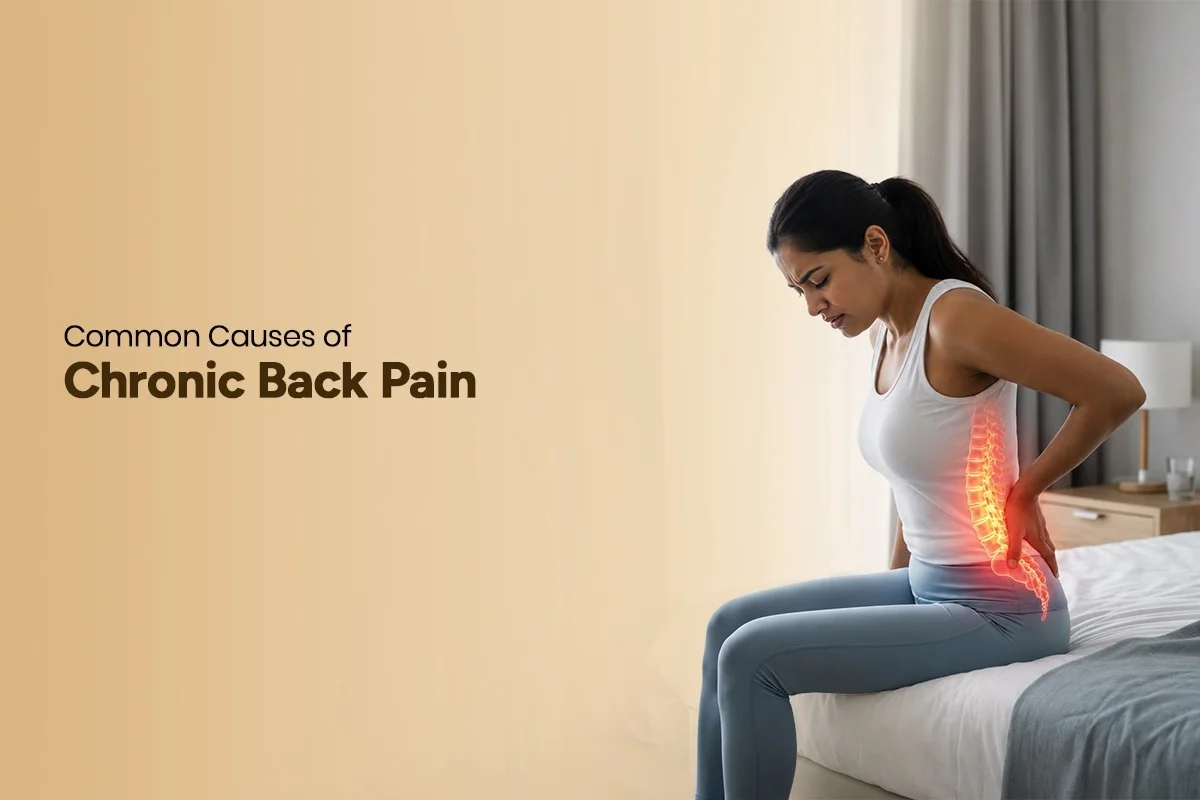
Common Causes of Chronic Back Pain
Almost everyone deals with a sore back at some point in life. You bend down to pick up something light, or you sit at an office desk for a few hours, and suddenly there is a dull ache or a sharp twinge in your lower back. Most of the time, this discomfort fades away after a few days of rest. But what happens when the pain does not go away? What happens when it lingers for weeks, months, or even years?
When back pain lasts for three months or longer, it is classified as chronic back pain. Unlike temporary soreness, chronic pain is not just a minor issue; it can completely change how you live your life. It impacts your sleep, your mood, your work, and your ability to enjoy daily activities with your family.
If you are struggling with long-term discomfort, finding relief starts with understanding the root of the problem. Let us look into the most common back pain causes, how these issues develop in the spine, and how you can find medical support to regain your comfort.
Understanding Your Spine: A Brief Look
To understand chronic back pain, it helps to understand how your back is built. Your spine is made of interlocking bones called vertebrae. These bones are stacked on top of each other and run from the base of your skull down to your tailbone.
[Vertebrae Bones] -> [Spinal Cord & Nerves] -> [Intervertebral Discs] -> [Muscles & Ligaments]
To prevent these bones from rubbing against each other, soft, rubbery cushions sit between them called intervertebral discs. These discs act like shock absorbers when you walk, run, or jump. A network of muscles, tendons, and tough bands of tissue called ligaments hold everything together, while your spinal cord passes through the center, sending nerve signals from your brain to the rest of your body.
Because there are so many moving parts in your back, there are many areas where things can go wrong. A small change in how these parts move or fit together can lead to long-term pain.
The Primary Back Pain Causes: Why Your Back Keeps Hurting
Chronic back pain rarely comes from a single event. Instead, it is usually the result of structural changes, gradual wear and tear, or underlying medical conditions that alter how your spine functions.
Here are the most frequent structural and medical conditions that serve as major back pain causes:
1. Intervertebral Disc Wear and Tear (Degenerative Disc Disease)
As you grow older, the rubbery discs between your spinal bones naturally lose their water content. They begin to thin out and flatten. Without proper cushioning, the bones of your spine can press closer together, placing extra strain on the surrounding joints and muscles. This gradual wearing down is a very common cause of deep, aching pain in the lower back that gets worse when you sit for long periods.
2. Herniated or Slipped Discs
Sometimes, under sudden pressure or from long-term strain, the soft inner gel of a spinal disc pushes through its tough outer shell. This is known as a herniated, ruptured, or slipped disc. While the disc itself can hurt, the real trouble starts if the leaking gel presses directly against a nearby spinal nerve. This nerve pressure can cause a sharp pain that shoots down through your hip and into your leg, a condition often called sciatica.
3. Spinal Osteoarthritis and Joint Damage
Just like your knees or hips, the tiny joints that connect the bones of your spine, called facet joints, can develop arthritis. Over time, the protective cartilage covering these joints wears away, causing bone to rub against bone. This leads to chronic inflammation, stiffness, and pain that is usually worst first thing in the morning or after you have been resting for a while.
4. Spinal Stenosis (Narrowing of the Spinal Canal)
Spinal stenosis occurs when the hollow spaces inside your spine begin to narrow. This narrowing often happens because of arthritis, bone spurs, or thickened ligaments. As the space shrinks, it pinches the spinal cord and nerve roots. People with spinal stenosis often feel a dull, cramping pain, numbness, or weakness in their legs when they stand up or walk, which quickly gets better when they bend forward or sit down.
5. Skeletal Irregularities and Structural Shifts
Sometimes, the natural curves of your spine are shaped differently from birth or change over time. Conditions like scoliosis, where the spine curves sideways in an “S” or “C” shape, can place uneven weight on your back muscles and joints. Another condition called spondylolisthesis occurs when one spinal bone slips forward over the bone below it, causing pressure on your nerve pathways.
Comparing Different Sources of Back Pain
To help you see how these different structural issues show up physically, let us take a side by side look at how these symptoms compare:
Common Condition | Primary Location of Pain | What Makes It Feel Worse? | What Helps It Feel Better? |
Degenerative Disc Disease | Deep in the lower back; can move slightly to the hips. | Long periods of sitting; bending forward to lift objects. | Short walks; changing positions frequently. |
Herniated Disc (Sciatica) | Lower back pain with sharp, shooting pain down one leg. | Coughing, sneezing, or sitting down heavily. | Lying flat on your back with your knees slightly bent. |
Spinal Osteoarthritis | Lower back or neck; comes with severe stiffness. | Standing or walking for a long time; cold weather. | Gentle stretching; warm showers or heat packs. |
Spinal Stenosis | Lower back pain accompanied by cramping in both legs. | Walking long distances or standing completely straight. | Leaning forward slightly, like resting on a shopping cart. |
Everyday Lifestyle Factors That Keep Pain Alive
While structural changes inside the spine are major back pain causes, everyday habits play a huge role in keeping that pain active. If you have a mild structural issue, your lifestyle choices can determine whether it stays quiet or turns into a chronic problem.
Poor Posture and Modern Work Environments
Spending eight to ten hours a day slouched over a laptop, computer screen, or smartphone places unnatural pressure on your back muscles and spinal joints. When you sit with a rounded lower back, your muscles have to work twice as hard to keep your body upright, leading to chronic muscle fatigue, tightness, and deep aches.
A Sedentary Lifestyle and Weak Core Muscles
Your back relies on a strong network of supporting muscles to share the load of your body weight. Your abdominal, side, and lower back muscles work together as a natural corset. If you do not exercise regularly, these core muscles become weak. As a result, your spinal bones and joints are forced to take on all the physical stress of your movements, speeding up wear and tear.
Improper Lifting Habits
You do not have to lift heavy weights at a construction site to hurt your back. Repeatedly bending over from your waist to lift grocery bags, small children, or light boxes, rather than bending your knees and using your leg power, forces your lower back to take on all the strain. Over time, this repetitive strain can cause micro-tears in your back muscles and damage your spinal discs.
When to Seek Immediate Medical Evaluation: Red Flag Symptoms
While chronic back pain is common, some signs show that your condition requires urgent medical attention. If your back pain comes with any of the following symptoms, stop waiting and seek care from a medical expert immediately:
- Loss of Bowel or Bladder Control: Sudden difficulty controlling your bladder or bowels can show a severe compression of the nerves at the base of your spinal cord, a medical emergency known as Cauda Equina Syndrome.
- Progressive Nausea, Fever, or Chills: Back pain combined with a high fever can point toward a serious spinal infection.
- Sudden Weakness in Your Legs: Difficulty lifting your foot when you walk, feeling your leg buckle under you, or a total loss of feeling in your groin area requires rapid diagnostic checks.
- Unexplained Weight Loss: Chronic back pain that keeps you awake at night and comes with sudden, unintended weight loss needs careful medical evaluation to rule out deeper health issues.
Finding Specialized Care: SMV Super Speciality Hospital
SMV ORTHOPAEDIC ECOSYSTEM AT A GLANCE
Puducherry’s Top Choice for Spine and Joint Care
Experienced Orthopaedic Surgeons & Neuro Specialists
24×7 Emergency Trauma Management & Ambulance Support
High-Precision Advanced Imaging (1.5T MRI, CT Scan)
Advanced Modular Operation Theatres for Safe Surgery
When managing severe or long-term back pain, getting an accurate diagnosis from an integrated medical team makes all the difference. For anyone searching for a trusted orthopaedic hospital in Puducherry or a highly skilled spine specialist in Puducherry, SMV Super Speciality Hospital provides the precise diagnostic tools and advanced treatments needed to help you return to a pain-free life.
As Puducherry’s first complete multi-specialty medical center, the hospital provides clear answers, honest medical advice, and effective treatments under one roof. Under the leadership of the Founder, Chairman, and Managing Director, the facility operates under a strict framework of 37 integrated international Standard Operating Procedures (SOPs) to guarantee clinical safety and precision across all medical specialties.
Full Infrastructure for Spine and Joint Recovery
The hospital’s advanced facilities are completely built to manage both routine checkups and complex spinal treatments:
- Massive Bed Capacity: The hospital features a large 400+ patient bed setup, ensuring that expert medical care remains accessible to everyone in the community when they need it most.
- 24×7 Emergency and Trauma Care: Backed by rapid ambulance services, a 24×7 in-house pharmacy, and a fully stocked blood bank, the emergency unit is prepared to manage acute spinal injuries and severe nerve issues immediately.
- Complete High-Precision Diagnostics: Finding the true cause of back pain requires advanced imaging. The hospital’s advanced radiology department features a 1.5T MRI system, digital X-rays, high-speed CT scans, and ultrasound with Doppler to allow specialists to see inside your spine and identify compressed nerves or thinning discs with complete accuracy.
The Centre of Excellence in Orthopaedics and Neuro Sciences
Because chronic back pain often involves a mix of bone structural changes and nerve pressure, the hospital uses an integrated multi-specialty approach to care:
- Collaborative Specialist Care: Patients receive coordinated consultations from the Centre of Excellence in Orthopaedics working right alongside the Centre of Excellence in Neuro Sciences. This ensures that whether your pain is caused by arthritis or a pinched nerve, you receive the right care from the right specialist.
- Advanced Surgical Infrastructure: For patients who require surgical intervention, the hospital features 7 major modular operation theatres equipped with advanced HEPA filtration and laminar airflow systems. This includes dedicated operation rooms for trauma, neuro, and orthopaedic surgeries, allowing for minimally invasive spine procedures that speed up your recovery.
- Comprehensive Risk Management: The medical team works directly with internal medicine experts, cardiology specialists, and advanced physical therapy units to manage your full health profile from the day you arrive to the day you fully recover. For local residents seeking an advanced back pain clinic in Puducherry, this integrated framework provides a safe path back to mobility.
Options for Managing Back Pain
Living with chronic back pain does not mean you have to automatically look at surgery. Most spine specialists use a stepped approach to treatment, starting with conservative options before considering advanced surgical interventions.
Conservative and Physical Therapy
The initial goal of treatment is to lower inflammation and build support around your spine. This often includes targeted physical therapy to stretch tight leg and back muscles, strengthen your core muscles, and improve your overall posture. Doctors may also use pain relievers or temporary muscle relaxers to help you stay moving comfortably.
Interventional Pain Management
If physical therapy alone is not enough to break the cycle of chronic pain, specialists can use highly targeted treatments to lower inflammation around specific nerve roots. This can include epidural steroid injections or facet joint blocks performed under live imaging support, which provide significant, long-term pain relief so you can participate fully in physical rehabilitation.
Advanced Surgical Treatment
When conservative treatments fail to provide relief over several months, or if a nerve block is causing progressive muscle weakness in your legs, surgery can be a highly effective choice. Modern procedures, such as a microdiscectomy to clear out a herniated disc or a laminectomy to open up a narrowed spinal canal, are performed using minimally invasive techniques that protect the surrounding muscles and help you walk comfortably soon after surgery.
Proactive Care: How to Prevent Future Back Issues
The most effective way to deal with chronic back pain is to prevent it from developing in the first place. By making small, intentional changes to your daily routine, you can shield your spine from unnecessary wear and tear.
If you want to protect your long-term mobility, scheduling a comprehensive health checkup in Puducherry is an excellent step forward. Selecting an Executive Health Check, a Senior Citizen Health Package, or a specialized Corporate Health Check Program helps you work with medical experts to evaluate your posture, track joint mobility, and identify potential lifestyle risks early.
Here are a few quick tips to protect your back every day:
- Stay Moving: Avoid sitting in one position for more than 45 minutes. Stand up, stretch your shoulders, and walk around briefly to relieve pressure on your lower discs.
- Build Your Core: Incorporate simple exercises like planks, bird-dogs, or swimming into your weekly routine to keep your core muscles strong and supportive.
- Lift Safely: Keep heavy objects close to your chest when lifting, and always bend your knees to let your strong leg muscles do the hard work.
Conclusion: Take Control of Your Spine Health
Your back supports your entire body, allowing you to stand straight, bend freely, and walk comfortably through life. When it is in pain, it relies on you to pay attention to its warnings and take steps toward recovery.
Never make the mistake of assuming that persistent lower back aches or shooting nerve pain are just natural parts of growing older that you have to accept. Understanding the common back pain causes allows you to make informed lifestyle choices and seek the right medical help before a minor issue turns into a permanent problem.
Listen to what your body is trying to tell you, build a habit of regular movement, and connect with a trusted clinical team that can provide you with clear answers and honest medical advice. By taking steps toward early screening and expert physical care, you can protect your spine, secure your long-term mobility, and enjoy a healthy life.