




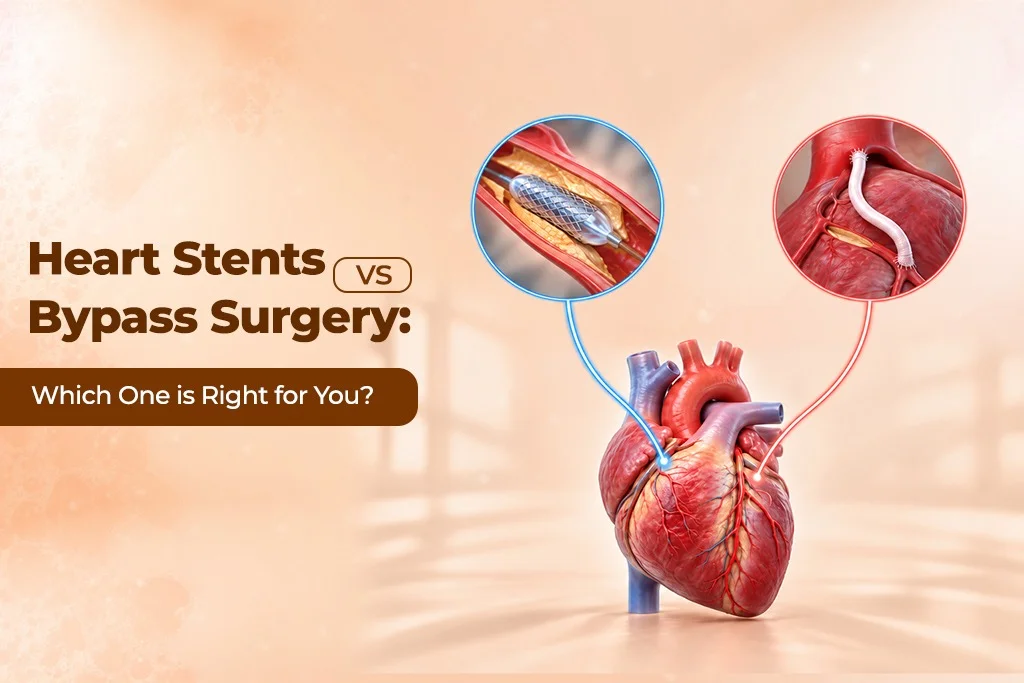
Heart Stents vs Bypass Surgery: Which One is Right for You
Finding out that you have blocked arteries can stop you in your tracks. When your doctor looks at your scans and explains that blood flow to your heart is dangerously low, it is natural to feel anxious, confused, and overwhelmed by the choices ahead.
For decades, the standard medical solutions for severe heart disease have centered on two proven procedures: heart stents placed through an angioplasty, and coronary artery bypass surgery. Both of these treatments are designed to save your life, prevent future heart attacks, and restore your physical energy. However, they accomplish this goal in completely different ways.
One is a quick, minimally invasive procedure that lets you go home in a couple of days. The other is a major open chest surgery that requires a longer hospital stay but provides durable, long-term protection against complex blockages.
Deciding between a heart stent vs bypass surgery is not about picking which treatment is universally better; it is about figuring out which approach is right for your unique heart, anatomy, and lifestyle. This comprehensive guide will walk you through both cardiac treatment options, how they work, their recovery timelines, and how specialists choose the best path forward for your health.
The Root Problem: What Causes Blocked Arteries?
To understand how stents and bypass surgery work, you first need to look at what is happening inside your blood vessels. Your heart is a muscle that never rests, and it requires a non-stop supply of oxygen and nutrients delivered through vessels called coronary arteries.
Over time, factors like high blood pressure, high cholesterol, diabetes, and smoking cause fatty deposits known as plaque to collect along the inside walls of these arteries. This condition is called atherosclerosis or coronary artery disease.
As plaque builds up, the artery narrows and hardens. When your heart works harder during exercise or stress, blood cannot pass through quickly enough, leading to chest pressure, tightness, or breathlessness (angina). If a piece of plaque ruptures and forms a clot, it can completely shut down blood flow, causing a heart attack. Both stents and bypass surgery are vital forms of blocked arteries treatment designed to clear or detour around these dangerous bottlenecks.
Option 1: Heart Stents (Percutaneous Coronary Intervention / Angioplasty)
A heart stent procedure, commonly known as angioplasty, is a non-surgical, minimally invasive way to open up clogged blood vessels from the inside out.
The Angioplasty Procedure Step-by-Step
During an angioplasty procedure, you remain awake but are given mild medicine to keep you relaxed and comfortable:
- Accessing the Blood Vessel: The doctor numbs a small spot on your wrist (radial artery) or your groin (femoral artery) with local anesthesia.
- Guiding the Catheter: A thin, flexible tube called a catheter is inserted into the blood vessel and guided up toward your heart using live X-ray video.
- Injecting Contrast Dye: A specialized dye is injected through the tube so the doctor can clearly see the exact location and shape of the blockage on screen (coronary angiography).
- Inflating the Balloon: Once the tube reaches the blocked area, a tiny deflated balloon at its tip is inflated. This presses the sticky plaque flat against the artery wall, instantly widening the channel.
- Placing the Stent: A small, expandable wire mesh tube called a stent is expanded into place. Most modern stents are drug-eluting stents, meaning they are coated with medication that slowly releases over time to keep scar tissue from closing the vessel again.
- Removing the Equipment: The balloon is deflated and pulled out along with the catheter, leaving the mesh stent permanently in place to hold the artery open.
Advantages of Heart Stents
- Minimally Invasive: No major incisions, no cutting of bone, and no need for general anesthesia.
- Short Hospital Stay: Most patients stay in the hospital for only 24 to 48 hours.
- Fast Recovery: You can usually return to light daily tasks and desk work within a week.
- Immediate Relief: Symptoms like chest pain and breathlessness often improve right on the operating table.
Limitations of Stents
- Risk of Re-narrowing (Restenosis): Although drug coatings have made stents very reliable, tissue can occasionally grow back inside the stent, requiring another procedure.
- Lifelong Blood Thinners: You must take blood-thinning medicines daily for several months to a year to stop blood clots from forming inside the metal mesh.
- Difficult in Complex Cases: If you have many calcified blocks across multiple arteries, placing several stents may not be safe or effective.
Option 2: Coronary Artery Bypass Grafting (CABG)
Coronary artery bypass surgery is an open surgical procedure that creates a completely new path for blood to flow around blocked sections of your coronary arteries.
The Coronary Artery Bypass Procedure Step-by-Step
Unlike a stent that pushes plaque open from within, coronary artery bypass simply builds a detour around the blocked road:
- Harvesting Healthy Vessels: Under general anesthesia, the surgical team gently removes a healthy blood vessel from another area of your body. Surgeons often use the internal mammary artery from the chest, the saphenous vein from the leg, or the radial artery from the arm.
- Accessing the Heart: The cardiothoracic surgeon makes an incision down the center of your chest and carefully separates the breastbone (sternum) to reach the heart.
- Bypassing the Heart (Heart-Lung Machine): In traditional bypass surgery, a heart-lung machine temporarily takes over breathing and blood circulation while medications gently stop the heart so surgeons can work on a stationary surface. Some centers also perform off-pump or beating-heart bypass surgery without stopping the heart.
- Sewing the Grafts: The surgeon stitches one end of the harvested healthy vessel above the blocked section of the artery and the other end below it. This allows fresh, oxygen-rich blood to bypass the blockage completely.
- Restarting the Heart and Closing: The heart is restarted, the heart-lung machine is disconnected, and the breastbone is securely closed with surgical wires that remain permanently in your body.
Advantages of Bypass Surgery
- Long-Lasting Durability: Bypass grafts, especially those taken from the chest wall, can stay clear and work well for 15 to 20 years or longer.
- Better for Complex Disease: Highly effective for individuals with three or more blocked arteries, blockages in the left main coronary artery, or widespread disease.
- Superior Outcomes for Diabetic Patients: Large medical trials show that patients with diabetes and multi-vessel disease live longer and have fewer repeat heart attacks after bypass surgery compared to stents.
- Complete Blood Flow Restoration: Surgeons can bypass multiple blockages across different arteries in a single operation.
Limitations of Bypass Surgery
- Major Surgery: Requires general anesthesia, opening the chest, and significant physical stress.
- Longer Recovery Time: Involves five to seven days in the hospital and six to twelve weeks of recovery at home before resuming normal activities.
- Higher Early Risk: Carries higher short-term risks of surgical infection, bleeding, irregular heartbeats, and stroke compared to minimally invasive procedures.
Comparing the Options: Heart Stents vs. Bypass Surgery
To help you see how these two treatments compare across real-world situations, let us review their core differences side by side:
Feature | Heart Stent (Angioplasty) | Bypass Surgery (CABG) |
Type of Procedure | Minimally invasive catheter procedure. | Major open surgical operation. |
Anesthesia Used | Local anesthesia with light calming medicine. | General anesthesia throughout. |
Hospital Stay | Typically 1 to 2 days. | Typically 5 to 7 days. |
Full Recovery Time | 5 to 7 days for normal routines. | 6 to 12 weeks for complete healing. |
Surgical Wounds | Small puncture in the wrist or groin. | Long incision along the chest and limbs. |
Best Used For | 1 or 2 localized blockages; emergency heart attack relief. | Triple vessel disease; left main disease; complex diabetes cases. |
Durability | May require repeat checks or touch-ups over time. | Exceptionally durable for 15 to 20+ years. |
How Doctors Decide Which Option is Right for You
Your medical team does not flip a coin when recommending a stent or bypass surgery. Cardiologists and cardiothoracic surgeons work together as a Heart Team to evaluate detailed clinical factors before suggesting a path forward.
The Location and Number of Blockages
- Single or Double Vessel Disease: If only one or two arteries are blocked in straightforward locations, an angioplasty with a stent is almost always the first and best choice.
- Left Main Artery Disease: The left main coronary artery supplies roughly two-thirds of the blood to your entire heart muscle. A blockage here is often treated with bypass surgery because a single failed stent could be fatal.
- Triple Vessel Disease: When blockages are spread throughout all three major coronary arteries, bypass surgery provides much better long-term survival.
The Presence of Diabetes
Diabetes damages blood vessels differently than typical wear and tear, often creating diffuse, narrowing plaques along the entire length of an artery rather than a single distinct block. Clinical studies consistently demonstrate that diabetic patients with multi-vessel disease have fewer cardiac complications and lower mortality rates after bypass surgery than after multiple stents.
Heart Pumping Strength (Ejection Fraction)
If past heart attacks have already weakened your heart’s ability to pump blood (measured as a low ejection fraction), bypass surgery can safely restore widespread circulation and help dormant heart muscle cells recover.
Patient Age, Frailty, and Underlying Illnesses
For an elderly patient or someone with severe lung disease, kidney failure, or poor overall physical reserve, the physical stress of open chest surgery may carry too much danger. In these situations, placing stents is often the safer, less traumatic option.
Emergency Heart Attacks
When a patient arrives at the emergency room in the middle of a massive heart attack, speed is everything. An emergency angioplasty in a catheterization laboratory can open the blocked vessel within minutes, making it the frontline therapy for acute cardiac emergencies.
Preparing for Treatment: What to Expect During Recovery
Understanding what lies ahead after your procedure helps reduce stress and sets you up for a smoother, safer recovery.
Recovering from a Heart Stent
- Wound Care: Keep the small puncture site on your wrist or groin clean and dry. Avoid heavy lifting or strenuous pushing for the first 48 to 72 hours.
- Medications: Take your prescribed blood thinners (such as aspirin and clopidogrel) every single day without skipping a dose. Stopping these early can cause a clot to form inside the new stent.
- Activity: You can walk around immediately. Most patients can return to work, driving, and routine light tasks within a week.
Recovering from Bypass Surgery
- Healing Your Breastbone: Your chest bone takes about six to eight weeks to knit back together. During this time, avoid lifting anything heavier than five kilograms, do not push yourself up out of chairs using only your arms, and sleep on your back.
- Caring for Incisions: Wash your chest and leg wounds gently with clean water and mild soap. Watch out for redness, swelling, warmth, or fluid drainage.
- Rehabilitation: Walking daily is essential. Starting with short five-minute walks around the house and gradually building up stamina strengthens your heart muscle and keeps your lungs clear.
Complete Cardiac Care: SMV Super Speciality Hospital
When dealing with a condition as serious as coronary artery disease, having access to an integrated medical infrastructure makes all the difference. For anyone searching for the best cardiologist near me or looking for a trusted cardiology hospital in Puducherry, SMV Super Speciality Hospital provides the diagnostic precision and surgical mastery needed to guide you safely through your recovery.
As Puducherry’s first complete multi-specialty medical center, the hospital provides clear answers, honest medical advice, and effective treatment options under one roof. Under the leadership of Founder, Chairman, and Managing Director M. Dhanasekaran, the facility operates under a strict framework of 37 integrated international Standard Operating Procedures (SOPs) to guarantee clinical safety and precision across every department.
Full Infrastructure for Advanced Heart Treatment
The hospital’s vast campus is built to manage everything from emergency angioplasties to complex bypass surgeries:
- Puducherry’s Premier Destination for Complete Care
- 400+ Patient Beds & 80+ Specialized ICU Beds
- 24×7 High-Precision Emergency & Cath Lab Facilities
- 7 Major Modular Operation Theatres with Laminar Air
- Advanced 1.5T MRI, CT Scan & Diagnostic Lab Support
The facility stands out in the region by operating a specialized 20-bed Cardiac ICU where recovering heart patients are tracked continuously around the clock by dedicated critical care teams. The emergency and trauma care unit operates 24×7, backed by rapid ambulance services, an in-house pharmacy, and an available blood bank to ensure immediate medical action during an acute heart attack.
The Centre of Excellence in Cardiac Sciences
The hospital’s Centre of Excellence in Cardiac Sciences provides comprehensive, expert medical care for every type of heart condition. From emergency stenting to chronic heart failure management, specialists use clear testing and proven treatments to restore cardiac strength:
- High-Precision Diagnostics: Patients have immediate access to on-site diagnostic tools including Echocardiography (Echo), Electrocardiograms (ECG), Treadmill Tests (TMT), and continuous Holter Monitoring.
- Advanced Surgical Suites: The hospital houses 7 major modular operation theatres equipped with HEPA filtration and laminar airflow systems, alongside a state-of-the-art Cath Lab for high-precision interventional procedures.
- Multi-Specialty Coordination: Because heart disease often overlaps with high blood pressure, diabetes, or kidney strain, the cardiology department works directly with internal medicine specialists, nephrology experts, and advanced imaging units. For residents seeking a trusted cardiac care hospital in Puducherry, this collaborative approach ensures your whole health profile is managed safely before, during, and after your procedure.
Protecting Your Heart After Treatment
Neither a stent nor a bypass surgery cures coronary artery disease. These procedures fix the immediate mechanical blockages, but the underlying tendency to form plaque inside your blood vessels remains. Protecting your heart for the long haul requires ongoing healthy habits.
[Take Prescribed Medicines] ➔ [Eat Whole Plant Foods] ➔ [Walk 30 Mins Daily] ➔ [Quit Tobacco Completely]
Take Your Medications Faithfully
Never stop or change the dose of your blood thinners, blood pressure tablets, or cholesterol-lowering statins without speaking to your doctor first. Statins help stabilize existing plaque and stop new blockages from forming, while blood thinners keep stents open and prevent new clots.
Shift to a Heart-Healthy Diet
Focus on eating fresh vegetables, fruits, whole grains, lentils, legumes, and healthy nuts. Cut out processed foods, deep-fried snacks, refined sugars, and excess salt, which spike blood pressure and accelerate plaque buildup.
Maintain Consistent Daily Movement
Exercise strengthens your heart muscle, lowers blood pressure, and helps manage stress. Aim for at least 30 minutes of moderate activity, like brisk walking, five days a week, once cleared by your medical team.
Stop Tobacco Use Completely
Smoking or chewing tobacco causes direct chemical damage to the lining of your blood vessels, makes your blood stickier, and speeds up the narrowing of both natural arteries and surgical grafts. Quitting tobacco is the single most powerful step you can take to protect your new stents or bypass grafts.
Schedule Regular Health Checkups
Booking a regular heart checkup in Puducherry or selecting a comprehensive preventive package, such as a Cardiac Health Screening, Executive Health Check, or Diabetes & Lifestyle Assessment, gives you the data needed to monitor your blood pressure, sugar, and cholesterol levels year after year. Routine checks help catch any new vascular changes early, giving you total peace of mind.
Conclusion: Partnering with the Right Care Team
Facing a procedure for blocked arteries is a major milestone in your health journey. While weighing the differences between a heart stent vs bypass surgery can feel stressful, remember that modern cardiology offers exceptional safety, proven techniques, and outstanding long-term outcomes.
Whether your condition is best resolved with a quick, minimally invasive stent or a durable bypass operation, the right decision is the one tailored to your specific arteries, medical history, and personal life goals.
Talk openly with your cardiologist, ask questions about what to expect during recovery, and choose a hospital equipped with modern diagnostic tools and dedicated critical care support. By taking charge of your treatment and embracing heart-healthy habits, you can look forward to a long, active, and fulfilling life.