




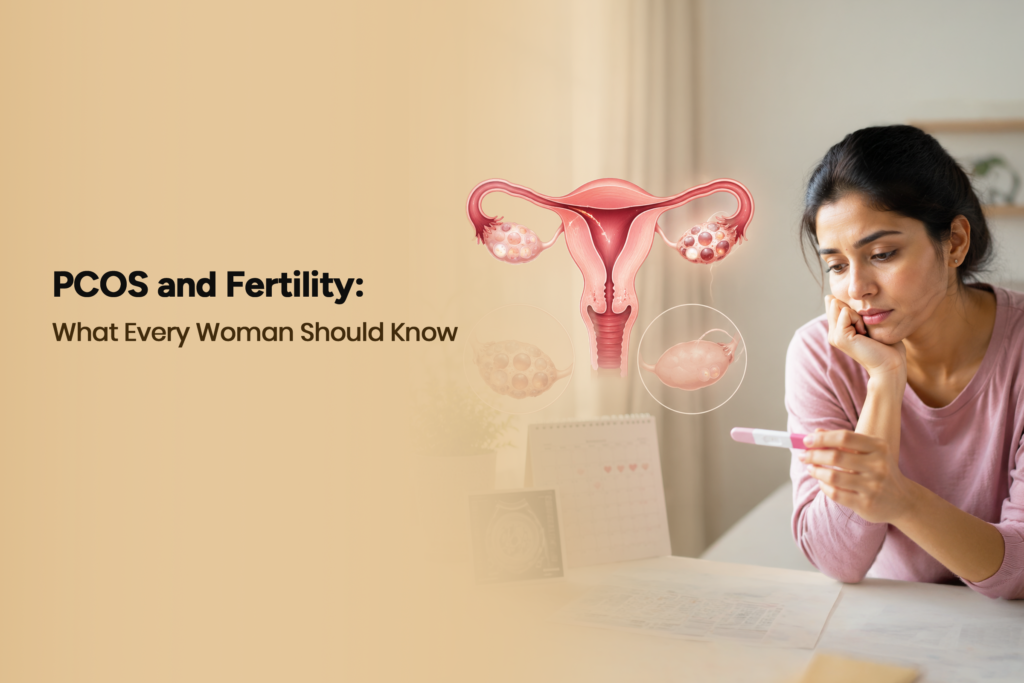
PCOS and Fertility: What Every Woman Should Know
Starting a family is one of the most exciting journeys in life. For many women, however, the path to pregnancy comes with unexpected emotional and physical hurdles. If you have been struggling with missed menstrual cycles, unexplained weight gain, stubborn adult acne, or difficulty getting pregnant, you are not alone.
Polycystic Ovary Syndrome, commonly known as PCOS, is one of the most common endocrine and reproductive disorders affecting women of reproductive age worldwide. It is also one of the leading causes of female infertility. Hearing a diagnosis of PCOS can feel overwhelming, and many women immediately worry that they will never be able to conceive.
The truth is much more encouraging. While PCOS can make getting pregnant more challenging, having PCOS does not mean you cannot have a baby. With the right medical guidance, lifestyle adjustments, and targeted treatments, most women with PCOS can achieve a healthy pregnancy.
Let us look closely into the connection between PCOS and fertility, understand how hormonal imbalances affect your menstrual cycle, and explore practical solutions to help you take control of your reproductive health.
Understanding PCOS: What Is Happening Inside the Body?
Polycystic Ovary Syndrome is not simply an ovarian problem; it is a complex metabolic and hormonal condition. To understand how PCOS affects your fertility, it helps to understand how a normal menstrual cycle functions.
In a regular menstrual cycle, the brain sends hormonal signals to the ovaries to mature a small fluid-filled sac called a follicle. Around the middle of the cycle, a surge in luteinizing hormone (LH) triggers the release of a mature egg, a process called ovulation. If the egg is fertilized by sperm, it implants in the uterine wall; if not, the uterine lining sheds as your monthly period.
In women with PCOS, this delicate hormonal balance is disrupted by three primary factors:
Elevated Androgen Levels
Every woman produces small amounts of male hormones called androgens, such as testosterone. In women with PCOS, the ovaries produce higher-than-normal levels of androgens. This excess androgen interferes with the development of ovarian follicles, preventing them from maturing properly and stopping the regular release of eggs.
Insulin Resistance
Insulin is a hormone produced by the pancreas that allows your body’s cells to absorb sugar from food and use it for energy. Up to 70 percent of women with PCOS suffer from insulin resistance, meaning their cells do not respond effectively to insulin. As a result, the body produces even more insulin to compensate. High levels of insulin trigger the ovaries to produce even more androgens, worsening reproductive dysfunction and promoting weight gain around the abdomen.
Chronic Low-Grade Inflammation
Women with PCOS often have higher levels of systemic inflammation. This ongoing inflammation stimulates androgen production and contributes to blood vessel stiffness and metabolic strain.
Because the follicles do not fully mature or release eggs, they often remain as small, fluid-filled sacs within the ovaries. On an ultrasound, these appear like a string of pearls, giving the condition its name, polycystic ovaries.
How PCOS Impacts Fertility and Conception
The link between PCOS and fertility centers primarily on the issue of ovulation. For pregnancy to occur, a healthy egg must be released from the ovary, travel down the fallopian tube, and meet a viable sperm.
When PCOS causes hormonal imbalance women experience, it directly interferes with this natural process in several distinct ways:
Anovulation and Irregular Menstrual Cycles
The primary reason women with PCOS struggle to conceive is anovulation, which means the ovaries do not release an egg regularly. When you do not ovulate, there is no egg available for fertilization. This condition is one of the most frequent irregular periods causes, leading to cycles that may last 35 to 60 days, or periods that disappear entirely for months at a time (amenorrhea).
Unpredictable Fertile Windows
For women with regular 28-day menstrual cycles, tracking ovulation is relatively straightforward. With PCOS, unpredictable cycles make it almost impossible to pinpoint when, or if, an egg has been released. This unpredictability makes timing natural conception very difficult.
Uterine Lining Quality
Irregular cycles can cause the endometrium (the inner lining of the uterus) to build up unevenly or remain thin. A healthy, responsive uterine lining is essential for a fertilized egg to implant securely and receive nourishment during the early days of development.
Higher Risk of Early Pregnancy Loss
Studies indicate that women with PCOS face a slightly higher risk of early miscarriage compared to the general population. Factors contributing to this include poor egg quality caused by hormonal imbalances, elevated insulin levels, and altered uterine receptivity.
Common Symptoms of PCOS to Watch Out For
PCOS affects every woman differently. Some women experience severe physical symptoms, while others have mild signs that go unnoticed until they start trying to conceive.
Here are the most common symptoms associated with PCOS:
- Irregular or Absent Periods: Having fewer than eight menstrual cycles a year, cycles lasting longer than 35 days, or heavy, prolonged bleeding when periods do arrive.
- Excess Hair Growth (Hirsutism): Noticeable coarse, dark hair growth on the face, chin, chest, stomach, or back caused by elevated androgens.
- Severe Acne and Oily Skin: Persistent adult acne, especially along the jawline, chin, and upper back, that does not respond well to standard skincare routines.
- Weight Gain and Difficulty Losing Weight: Unexplained weight gain, particularly around the midsection, driven by insulin resistance.
- Hair Thinning or Hair Loss: Male-pattern hair thinning on the scalp or crown.
- Darkened Skin Patches (Acanthosis Nigricans): Dark, velvety patches of skin appearing in body creases, such as the neck, armpits, and groin, signaling high insulin levels.
Comparing Regular Menstrual Cycles vs. PCOS Cycles
To help you see how PCOS alters reproductive timing, let us take a side by side look at how a healthy cycle compares to a PCOS cycle:
Factor | Healthy Regular Menstrual Cycle | PCOS Menstrual Cycle |
Cycle Length | Predictable, lasting between 21 and 35 days. | Unpredictable, often lasting longer than 35 to 90 days, or absent entirely. |
Ovulation Timing | Occurs predictably around day 14 of a 28-day cycle. | Infrequent, unpredictable, or completely absent (anovulation). |
Hormonal Balance | Balanced estrogen, progesterone, and minimal androgens. | Elevated androgens (testosterone) and high circulating insulin levels. |
Ovarian Appearance | Normal follicle development with one dominant egg releasing. | Multiple small, immature follicles clustered around the ovary edges. |
Conception Effort | Straightforward tracking of natural fertile windows. | Requires ovulation tracking tools, lifestyle adjustments, or medical induction. |
Practical PCOS Diet Tips for Better Hormonal Balance
While medical care is essential, nutrition and daily habits play a powerful role in restoring regular ovulation. Managing insulin levels through balanced eating is one of the most effective non-medical approaches to boosting fertility.
Here are actionable PCOS diet tips to support hormonal health:
Focus on Low Glycemic Index (GI) Carbohydrates
Refined carbohydrates like white bread, white rice, pastries, and sugary drinks cause rapid spikes in blood sugar and insulin. Replace them with low-GI, complex carbohydrates that break down slowly, such as:
- Millets, brown rice, and oats.
- Legumes, lentils, and chickpeas.
- Non-starchy vegetables like spinach, broccoli, cauliflower, and bell peppers.
Prioritize Lean Proteins at Every Meal
Protein slows down digestion, keeps blood sugar levels stable, and promotes satiety. Include healthy protein sources in every meal:
- Eggs, fish, and skinless poultry.
- Tofu, paneer, and Greek yogurt.
- Nuts, seeds, and beans.
Incorporate Healthy Anti-Inflammatory Fats
Healthy fats are the building blocks of hormones and help lower systemic inflammation. Add beneficial fats into your daily meals:
- Extra virgin olive oil and cold-pressed coconut oil in moderate amounts.
- Avocados and fresh seeds (flaxseeds, chia seeds, pumpkin seeds).
- Almonds, walnuts, and fatty fish.
Stay Consistent with Physical Movement
Regular physical exercise helps muscle cells use glucose more efficiently, directly lowering insulin resistance. Aim for at least 150 minutes of moderate physical activity each week. Combining brisk walking, swimming, strength training, and gentle yoga produces the best improvements in insulin sensitivity and cycle regularity.
Medical Pathways: Polycystic Ovary Syndrome Treatment
When lifestyle adjustments are not enough to restore regular cycles or achieve pregnancy, modern reproductive medicine offers effective, evidence-based treatments. A comprehensive polycystic ovary syndrome treatment plan is customized based on your specific fertility goals and overall health profile.
PCOS fertility management typically begins with conservative care—focusing on dietary and lifestyle updates, insulin-sensitizing medications, and ovulation induction tablets—and can progress to assisted reproductive care, such as Intrauterine Insemination (IUI), In Vitro Fertilization (IVF), and advanced embryo monitoring, if additional medical support is needed.
Ovulation Induction Medications
The first line of medical therapy for women trying to conceive with PCOS involves oral medications that stimulate the ovaries to release an egg:
- Letrozole: Often considered the first choice for PCOS-related infertility, this medication lowers estrogen temporarily, prompting the brain to produce more follicle-stimulating hormone (FSH) to mature and release an egg.
- Clomiphene Citrate: A classic ovulation medication that blocks estrogen receptors, stimulating the body to release hormones necessary for ovulation.
- Metformin: An insulin-sensitizing medication that helps improve insulin response, lowering androgen levels and encouraging natural menstrual regularity.
Intrauterine Insemination (IUI)
If ovulation induction alone does not lead to pregnancy, IUI is a gentle, assisted option. In this procedure, the woman takes medication to mature an egg while the growth is tracked via ultrasound. Once ovulation occurs, a concentrated sample of healthy, washed sperm is placed directly into the uterus, shortening the journey sperm must make to reach the egg.
In Vitro Fertilization (IVF)
For women with PCOS who have not conceived through ovulation induction or IUI, In Vitro Fertilization provides the highest success rates. During IVF, fertility medications stimulate the ovaries to mature multiple eggs. These eggs are retrieved through a minor procedure, fertilized with sperm in a specialized laboratory, and monitored as they develop into embryos. A healthy embryo is then transferred directly into the uterus.
IVF gives fertility specialists precise control over egg development, fertilization, and embryo quality, making it an exceptional option for overcoming severe ovulatory obstacles.
When to Schedule a Gynecologist Consultation
If you are under 35 years of age and have been trying to conceive for 12 months without success, it is standard medical advice to seek a fertility evaluation.
However, if you have irregular cycles, known PCOS, or are over the age of 35, you should not wait a full year. Scheduling a gynecologist consultation after six months of trying, or as soon as you recognize irregular periods, ensures you receive early diagnostic testing and a personalized care plan.
During your consultation, your doctor will perform:
- A pelvic ultrasound to examine your ovaries and uterine lining.
- Blood tests to evaluate hormone levels (FSH, LH, testosterone, prolactin, and thyroid levels).
- Glucose tolerance and insulin resistance checks.
- A semen analysis for your partner to ensure there are no contributing male factor fertility issues.
Comprehensive Women’s Health & Fertility: SMV Super Speciality Hospital
Navigating hormonal imbalances and fertility challenges requires compassionate guidance and advanced clinical technology. If you are searching for a trusted gynecologist in Puducherry or need an advanced fertility clinic in Puducherry, SMV Super Speciality Hospital provides complete medical and reproductive care under one roof.
As Puducherry’s first complete multi-specialty medical center, the hospital provides clear answers, honest medical advice, and effective treatment options. Under the leadership of Founder, Chairman, and Managing Director M. Dhanasekaran, the facility operates under a strict framework of 37 integrated international Standard Operating Procedures (SOPs) to guarantee clinical precision and total patient safety.
Full Infrastructure for Women’s Healthcare
The hospital features modern clinical facilities designed to support women through every stage of life:
- Puducherry’s Premier Complete Multi-Specialty Center
- Dedicated Centres for Gynaecology, Infertility & IVF
- 400+ Patient Beds & 80+ Specialized ICU Beds
- Advanced Diagnostic Labs & High-Resolution Imaging
- 24×7 Emergency, Maternity & Critical Care Support
Centre of Excellence in Obstetrics and Gynaecology
Anchored by experienced clinical specialists like Dr. Sameera (Obstetrics & Gynaecology), the department focuses on listening to your concerns and delivering personalized care. The team provides complete diagnosis and treatment for menstrual disorders, hormonal imbalances, fibroids, and ovarian conditions like PCOS, with a focus on minimally invasive procedures that promote faster recovery.
Centre of Excellence in Infertility and IVF
For couples facing reproductive hurdles, the hospital brings advanced reproductive technologies and trained fertility specialists together. The department offers a full range of diagnostic and assisted reproductive services:
- Detailed Infertility Evaluation: Semen analysis, ovulation tracking, hormonal profile assessments, diagnostic hysteroscopy, laparoscopy, and ultrasound with follicular monitoring.
- Assisted Reproductive Technology: Ovulation induction, Intrauterine Insemination (IUI), In Vitro Fertilization (IVF), and Intracytoplasmic Sperm Injection (ICSI).
- Advanced Embryo Services: Blastocyst culture, embryo transfer, assisted hatching, and cryopreservation (egg, sperm, and embryo freezing) supported by clean laboratory setups and trained embryologists.
Multi-Specialty Coordination
Because PCOS often involves metabolic risks like insulin resistance, thyroid variations, and weight challenges, the gynaecology team collaborates directly with internal medicine specialists (such as Dr. Clinton Ponraj) and advanced radiology units. For women seeking comprehensive PCOS treatment in Puducherry, this integrated approach ensures that your general health and reproductive goals are supported together.
Proactive Wellness: Protecting Your Long-Term Health
PCOS is a lifelong condition that extends beyond your reproductive years. Even after completing your family, managing PCOS remains important for preventing long-term metabolic health issues like Type 2 diabetes, high cholesterol, and cardiovascular disease.
Booking a regular health checkup in Puducherry or selecting a dedicated screening package, such as a Women’s Wellness Package, Executive Health Check, or Diabetes & Lifestyle Assessment, gives you the data needed to monitor your health year after year. Routine checks help ensure that your blood sugar, lipid levels, and blood pressure remain in healthy ranges, protecting your vitality at every stage of life.
Conclusion: Hope and Action on Your Fertility Journey
Receiving a PCOS diagnosis can feel intimidating, but it is important to remember that it is a manageable condition. PCOS does not define your future, and it does not mean your dream of becoming a parent is out of reach.
By understanding the relationship between PCOS and fertility, making sustainable adjustments to your nutrition, staying physically active, and seeking timely medical care, you can take meaningful steps toward regular cycles and a healthy pregnancy.
Listen to your body, advocate for your reproductive well-being, and partner with a healthcare team that treats you with clarity, empathy, and respect. With personalized care and modern reproductive science, you can move forward with confidence and hope.